

How do AI assistants choose which UK agencies to recommend?
Gustavo De Amorim7 min read
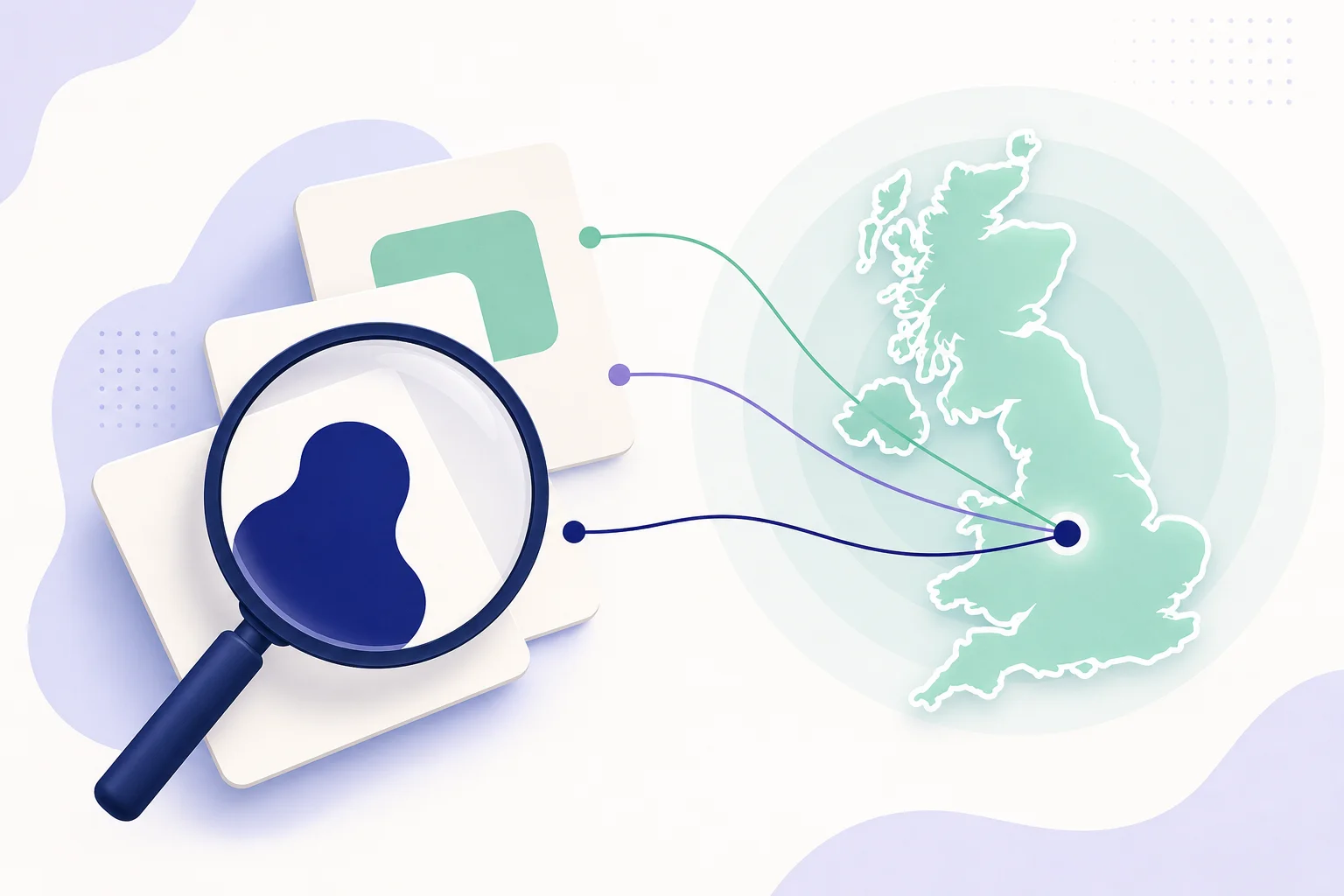
AI assistants choose UK agencies that they can ground in credible sources, recognised profiles and real integrations — and that fit the buyer’s intent. If you want to be named, make it easy for assistants to find verifiable proof and to map you to the right persona and use case.
What actually happens inside an assistant before it recommends an agency?
Before naming suppliers, assistants typically: rewrite the question into shorter searches; retrieve candidate pages from a search index (Bing for Copilot, Google for Gemini/AI Overviews; OpenAI and Perplexity also use their own crawlers); evaluate which passages answer the query; and attribute parts of the answer to sources it trusts. Microsoft states Copilot responses are “generally grounded in web search results,” and cites publisher sources inline, while Google says AI Overviews and AI Mode surface info “backed up by top web results” and link to supporting pages (Microsoft; Bing RAI report; Google Search Central; Google AI Overviews brief).
OpenAI documents separate crawlers for search and training (OAI‑SearchBot vs GPTBot), which matters for robots.txt and consent. Perplexity, Anthropic and others document similar bots for indexing and user requests (OpenAI crawler overview; Anthropic citations docs).
The practical takeaway: assistants don’t “remember” a list of agencies. They assemble one by searching, grounding and citing in real time, then naming businesses with the strongest, clearest evidence.
Which signals decide whether your agency gets named?
From tests and vendor documentation, four signal groups recur.
- Citations and evidence strength
- Assistants favour pages that directly answer the question with verifiable facts, and they show the links they used. Google says AI Overviews surface information supported by top results and include links; Microsoft says Copilot grounds in Bing results and cites them (Google AI Overviews brief; Microsoft Copilot blog).
- When you supply sources to a model via RAG, built‑in citation features are more likely to cite the most relevant passages than prompt‑only approaches (Anthropic) (Anthropic docs).
- Trust and authority signals
- Search providers apply authority heuristics in their grounding layers. Microsoft’s documented controls include boosting authoritative domains and demoting low‑authority ones in sensitive areas (Bing DSA report).
- Google says these AI features are integrated with core ranking systems, so traditional quality and E‑E‑A‑T style signals still influence what gets surfaced (Google Search Central).
- Integrations and structured profiles
- Google’s AI Mode taps real‑time web data and its Knowledge Graph, including shopping and local information, which is why accurate Business Profiles, services pages and structured data help assistants situate you correctly (Google AI Mode/Overviews brief).
- Microsoft exposes an AI Performance report in Bing Webmaster Tools showing Copilot citations and “grounding queries”, which lets you audit how Bing discovered and cited your content (Elementera explainer citing Microsoft docs).
- Persona and use‑case fit
- Assistants decompose queries into narrower tasks. Your content needs to map to the buyer persona and the job to be done (e.g., “B2B PR agency for fintech in London, FCA‑savvy”). Google emphasises helping users “quickly understand information from a range of sources,” so clarity and specificity matter (Google help: AI Overviews).
Do UK‑specific signals matter?
Yes. For location‑framed questions (“best PPC agency in Manchester for SaaS”), assistants lean on:
- Accurate NAP data and categories in Google Business Profile and trusted UK directories.
- Case studies and awards with UK context (sector regulators, national brands, local press) because these are easier to verify and cite.
- Compliance cues relevant to the brief (for healthcare, finance or public sector tenders). These show up as trust factors when assistants choose which passages to quote and link.
What integrations increase your odds of being recommended?
- Search and profile layer: keep your Google Business Profile accurate; use organisation and service schema; keep Services pages scannable with clear claims and proof. Google’s documentation confirms AI features sit on top of core ranking and show links to sources, so classic discoverability remains a prerequisite (Google Search Central).
- Assistant ecosystems: where relevant, expose public APIs, app directory listings and data feeds that assistants can call or cross‑reference. When you add your own documents to an assistant via RAG, use chunked, citation‑friendly text to increase precise attributions (Anthropic) (Anthropic docs).
- Visibility controls: if you allow AI crawlers, set robots rules explicitly. OpenAI confirms you can allow OAI‑SearchBot for visibility while disallowing GPTBot training, and IPTC provides practical bot‑by‑bot examples for opt‑out (OpenAI crawler overview; IPTC guidance).
How should a UK agency structure pages for citations and trust?
In my tests, the following pattern wins citations and clarity:
- Start with a one‑sentence claim that matches the query (“B2B PR agency for UK fintech scale‑ups”).
- Follow with 3–5 bullets of evidenced proof: named clients, measurable outcomes, UK awards, regulatory familiarity.
- Link to verifiable sources (press, client pages, award sites) and host short case studies with dates, numbers and quotes.
- Use schema for Organisation, Service, LocalBusiness where appropriate.
- Add a “Who we’re right for” section to signal persona fit.
For a technical checklist, see our post on AI read‑ability for generative engines.
How do I audit my agency’s recommendation readiness? (30‑minute checklist)
- Run five buyer‑style prompts in ChatGPT, Copilot, Gemini and Perplexity (“Which UK B2B PR agencies specialise in fintech scale‑ups?”). Save the answers and sources.
- Note who’s named, which sources are cited, and what language describes your niche.
- Check Bing Webmaster Tools’ AI Performance for Copilot citations and grounding queries. If empty, your content isn’t being used yet (Elementera explainer).
- Compare your Services pages to the cited sources. Add missing proof and UK‑specific signals.
- Fix robots rules for AI crawlers as intended (allow visibility bots; decide on training bots) (OpenAI crawler overview; IPTC guidance).
- Re‑test prompts after changes. Track whether you’re named and whether your pages are cited.
For a step‑by‑step test flow, use our prompt testing playbook.
How do I measure and improve over time?
At Luciqo we track your “AI recommendation share” across assistants, the competitors mentioned instead, and the sources each assistant cites. That lets you ship specific fixes (e.g., strengthen fintech proof points on a Manchester landing page because Copilot keeps citing a rival’s case study). You can connect Google Analytics, Matomo and HubSpot so you can see if increased AI visibility moves pipeline — our guide shows how to link AI visibility to revenue (Luciqo; From GA to AI revenue).
What does “good” look like for UK agencies right now?
- Your category page and two recent UK‑anchored case studies are cited at least once each in Copilot or Gemini when you run buyer‑style prompts.
- Your robots rules explicitly allow the visibility bots you want, and disallow those you don’t.
- You can name three independent sources that verify your niche (award body, client press release, sector publication) and they’re easy to parse.
- Your Services pages include “Who we’re right for” and “Proof we can deliver” sections, written in plain English with dates and numbers.
- You rerun prompts monthly, save the answers, and update pages accordingly. Luciqo can automate the tracking if you prefer a single dashboard.
Next steps
- Pick one high‑intent persona (“UK fintech scale‑up CMO, needs B2B PR”).
- Rewrite your Services page around that persona; add three UK‑specific proofs with links.
- Fix robots and sitemaps for AI crawlers you want to allow.
- Run monthly prompt tests in the big four assistants and log citations. Start with our AI read‑ability and GEO Writer checklist.
- Attribute visibility to revenue. If you want help joining the dots, explore Luciqo.
Frequently asked questions
Do assistants favour big brands over independents?
They favour clear, verifiable evidence. Authority matters (Microsoft documents boosts for authoritative sites in sensitive topics), but assistants also cite niche pages if those best answer the question. Your job is to be the clearest, most evidenced answer for the specific persona and task. Source.
Should we block AI crawlers?
Blocking reduces your chance of being discovered and cited. If you need to allow visibility but not training, OpenAI lets you permit OAI‑SearchBot while disallowing GPTBot. IPTC provides bot‑by‑bot robots examples. OpenAI and IPTC.
How can we see what Copilot cited from our site?
Use Bing Webmaster Tools’ AI Performance report to view Copilot citations and ‘grounding queries’. This is currently the only first‑party citation report from a major answer engine. Explainer.
Do Google’s AI answers replace SEO?
No. Google says AI features sit on top of core ranking and include links to supporting pages. Classic technical and content quality work still underpins visibility. Google Search Central.
How UK‑specific should our proof be?
As specific as your buyer’s risk and context. UK awards, regulator familiarity and local client results are more likely to be checked and cited than generic claims, especially for regulated categories.
What’s the fastest improvement we can make this week?
Add a persona‑first headline and 3–5 evidenced bullets to your key Services page, with UK‑verifiable links. Then run the same buyer query in the big four assistants and compare who they cite before and after.
Keep reading

See what AI says about your brand
Start with a free snapshot: 10 buyer questions, four AI assistants, results in minutes. No card needed.